Aprite un po’ quegli occhi

Chiara took Florence and Oona to the opera last night and I went along.  We saw The Marriage of Figaro, a comedy with the score by Mozart and the libretto by Lorenzo Da Ponte.  It was first preformed in 1786 and it’s sad that media representations of gender have changed very little since then.  From a scene in the last act of the opera where Figaro suspects his new wife of meeting another man for an illicit nightime rendevous:

Just open your eyes,
You rash and foolish men,
And look at these women;
See them as they are,
These goddesses, so called
By the intoxicated senses,
To whom feeble reason
Offers tribute.
They are witches who cast spells
For our torment,
Sirens who sing
For our confusion,
Night owls who fascinate
To pluck us,
Comets who dazzle
To deprive us of light.
They are thorned roses,
Alluring vixens,
Smiling she-bears,
Malign doves,
Masters of deceit,
Friends of distress
Who cheat and lie,
Who feel no love
And have no pity.
The rest I need not say,
For eveyone knows it already.

You can also listen to an mp3 of the aria.

yard signs and zounds

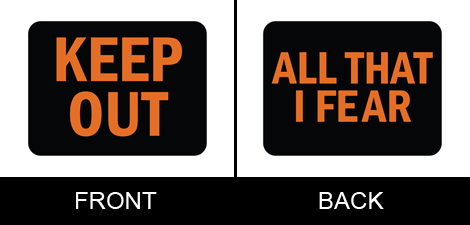
 Keep Out All That I Fear Yard Sign

The yard signs that Chiara and I made are getting distributed this week as part of IU’s Arts Week.  I saw the actual signs last night for the first time,  I guess their appearance around town is going to be tracked using a google map.  Today, I’ve been listening to Zounds and the song Fear is another articulation of ideas I connect to these signs:

Sing a song of violence and listen for the sound
All the little soldiers start to come around
Start it with a rumour, a whisper in an ear
Suspision don’t take very long before it turns to fear
??? Said I need a reason, made of up and low ???
??? Feel what they’re fighting, just tell them where to go ???
Give the chance of glory, give the chance of fame
Give the boy an enemy, give the dog a name
Keep the factions fighting, start them off the school
Keep the factions fighting so you divide and rule
Football teams are splendid and fashion just a tool
Keep the factions fighting so you divide and rule

Fear can be a bum thing
A silly and a dumb thing
Fear can be the one thing
That keeps us all apart

Frightened of the humans and frightened of their stares
Frightened of the poisons they pump into the air
Frightened of the chemicals they spray upon the land
Frightened of the power they hold within their hands
Frightened of bureaucracy and frightened of the law
Frightened of the government and who it’s working for
Frightened of the children who won’t know who to cope
With a world in rack and ruin from their technocratic dope, dope, dope

Fear can be a bum thing
A silly and a dumb thing
Fear can be the one thing
That keeps us in the dark

Frightened of the humans, frightened of their stares
Frightened of the poisons pumped into the air
Frightened of the chemicals they spray upon the land
Frightened of the power they hold within their hands
Frightened of bureaucracy and frightened of the law
Frightened of the government and who it’s working for
Frightened of the children who won’t know who to cope
With a world in rack and ruin from their technocratic dope, dope, dope

Fear can be a bum thing
A silly and a dumb thing
Fear can be the one thing
That keeps us in the dark

Fear can be a bum thing
A silly and a dumb thing
Fear can be the one thing
That keeps us all apart

Frightened of the humans, frightened of their stares
Frightened of the poisons pumped into your air
Frightened of the chemicals spayed upon my land
Frightened of the power hold within their hands
Frightened of bureaucracy, frightened of the law
Frightened of the government who’s actions lead to war
Frightened of the children who won’t know who to cope
With a world in rack and ruin from their technocratic dope, dope, dope

Fear can be a bum thing
A silly and a dumb thing
Fear can be the one thing
That keeps us in the dark

Fear can be a bum thing
A silly and a dumb thing
Fear can be the one thing
That keeps us all apart

healthcare cont’d

I still haven’t heard back about my application to Indiana’s state-subsidised health insurance, but I heard a story on Morning Edition this morning about a Massachusetts law that requires all state residents to have health insurance or face a tax penalty.  There is a plan in place to make health insurance more accessible to the uninsured and to subsidize the costs of insurance for people below 3x the poverty level.  Presidential candidate Hillary Clinton supports an “individual mandate” similar to the Massachusetts plan.

Link 

punk as social force?

I feel like I’ve gained and reiterated a more critical perspective of perspective on punk in reading and responding to Daniel Traber’s L.A.’s “White Minority”: Punk and The Contradictions of Self-Marginalization.  Michael Eric Dyson spoke at IU this week and talked a lot about hip-hop as an amplification of culture at large (i.e. critics of misogynist rap lyrics failing to acknowledge the connection between those attitudes and cross-cultural ideas of power and masculinity).  Similarly, though not to say that these roles are mutually-exclusive, I think that punk is more often a reflection of culture-at-large than a provocative agent.  Right now, I’m slowly reading through Jackson Katz’s The Macho Paradox and he refers often to the history of the formation of the battered women’s and rape crisis movements.  He quotes Debby Tucker, cofounder of the National Center on Domestic and Sexual Violence and volunteer in the first rape crisis center in Texas on the beginnings of those movements:

It all started with women learning to listen to each other.  The battered women’s and rape crisis movements drew strength from our understanding that what happened to individual women was not isolated.  At first we just wanted to help … later we began to hear about women’s experiences, and see commonalities and patterns not only in the abuses they suffered but in the responses to them by the police, the courts, the clergy.  We then began to use what we’d learned to confront men both at a personal and an institutional level.

So, the riot-grrl movement in the 90s, strongly connected to punk subculture, can be seen as a manifestation of a larger consciousness of women listening to women and organizing politically around the injustices articulated through those stories.

In the present, I can’t help but see the rising popularity of punk music that talks about connections to family  (e.g. The Devil in My Family by Ghost Mice, or Grandma Song by Defiance, Ohio) as a reflection of a generation whose parents are more involved in the lives of their children (e.g. “Helicopter Parents“) and whose children are more at ease with the connectedness of their parents.  Similarly, I see more subtle departures in ideology and identity between contemporary punks identifying with D.I.Y. practices and values and their parents, especially when compared with the extreme symbolic choices in lifestyle and fashion that punks in the 70s and 80s used to signify a separation from white, middle-class values.

In the case of riot-grrl and feminist organizing, one can see the positive integration of youth-culture and an important social movement.  In the case of changing perceptions of family in punk subculture you can see how different relationships with the idea of family each offer their own limitations, whether through overly symbolic identifications or what borders on conservatism.  In either case though, I come to the conclusion that punk wasn’t the movement or social force driving the connected dynamics.

Writing this is strange for me, because even though I increasingly recognize that punk media and subculture might not be a driving social force, I continue to contextualize other social dynamics through my own punk identity and my history through that identity.

homelessness, foreclosures, and squatting

Some homeless people turn to foreclosed homes for shelter: HeraldTimesOnline.com:

The nation’s foreclosure crisis has led to a painful irony for homeless people: On any given night they are outnumbered in some cities by vacant houses. Some street people are taking advantage of the opportunity by becoming squatters.

Foreclosed homes often have an advantage over boarded-up and dilapidated houses abandoned because of rundown conditions: Sometimes the heat, lights and water are still working.

“That’s what you call convenient,” said James Bertan, 41, an ex-convict and self-described “bando,” or someone who lives in abandoned houses.

lecture/opening by/for sarah fitzsimons @ FA 102/SOFA gallery (IU campus). 6p-9. free.

 From the SOFA Gallery website:

Fusion Culture: Transportable Living and the Landscape will explore ideas about environmental change related to global warming and inventions created by visual artists in response to these changes. With increased access to the Internet and media though a variety of outlets, people often lack a sense of ownership or belonging to a specific place, landscape or environment. This has diminished traditional connections to the land, creating a new relationship to our sense of place. Because we are no longer connected to our immediate environment, we have lost our ability to measure our effect on the world and the ways that we affect the global environment.

Sarah FitzSimons is an artist whose work combines sculpture, outdoor installation, photography and video. She collaborates with oceans, deserts, rivers, and mountain ranges, exploring collisions of the physical and metaphoric.

The show runs from February 19-March 7.

Sarah Fitzsimons is giving a lecture at 6pm on Friday, February 22 followed by an opening reception for the show.

Link

Awareness-raisng special programming on homelessness on WFHB. 7p-9a.

From a WFHB press release:

Bloomington Community Radio pre-empts normal programming for national special on homelessness

On Wednesday, February 20 and Thursday, February 21, Bloomington’s community radio station will once again unite listeners with people all across the country to raise awareness of the defining social justice issue of our time.  WFHB is one of more than 120 independent radio stations carrying the National Homelessness Marathon, a 14-hour live broadcast featuring the voices and stories of homeless people from around the U.S.  WFHB will air the entire fourteen-hour program, currently in its eleventh year, starting at 7pm on Wednesday and ending at 9am on Thursday, when the station returns to its regularly-scheduled programming.  This year is extra-special because the national broadcast will feature a segment produced by WFHB News Director Chad Carrothers.

“We slept out in a tent in the middle of winter, so that was kind of rough…we had like fifty blankets it seemed like and we were still cold…tryin’ to fight, we gotta figure out something, and I remember saying we gotta find something because we can’t be out here forever”

– 22-year-old Josh Morales, Shalom Center client

Josh and his father Abraham are featured in WFHB’s special segment “Father and Son: Generational Homelessness”, exploring how being homeless together has bonded them in a way that transcends typical father-son relationships.

As a local lead-in to the National Homelessness Marathon, WFHB will air an hour of locally-produced programming on these issues, including a feature-length interview with the Morales father-son team and a rebroadcast of the recent memorial service for the people who died homeless on our streets this past year.  Airing from 6-7pm on Feb. 20, the local programming will include Joel Rekas, director of Bloomington’s Shalom Center, a day facility for local people struggling with poverty and homelessness.

“It’s unacceptable in a country like the United States that this continues to be an issue”, says Rekas.  “We’re twenty years out now from this being identified as a major social issue, and unfortunately for most of us, a walk downtown in a big city involves stepping over people on the sidewalk and lying on park benches and we don’t blink an eye.  Folks experiencing homelessness have really become part of the urban landscape.”

There are approximately 4,000 homeless individuals and families living in poverty right now in the Bloomington area, according to Rekas.  That’s just one reason why WFHB News Director Chad Carrothers channels significant volunteer effort into local coverage of the issue.

“The best way to understand someone is to really listen to what they have to say,” Carrothers opines.  “Radio can be a very personal and intimate experience.  The stories told to me by people living on the streets of my town leave the mike wobbling in my hand.  The stark reality is overpowering.”

While WFHB News regularly produces its own stories and special features on homelessness, being a part of a national broadcast is a unique opportunity to bring different communities together.  The Eleventh Annual Homelessness Marathon will originate from Nashville, Tennessee.  It will be hosted by Nashville’s community radio station WRFN and a committee of activists on poverty and housing issues.

“As the Marathon has grown, its philosophy has evolved. When I started, I thought I had to scold people and tell them why they ought to care,” confesses the Homelessness Marathon’s director, Jeremy Weir Alderson.  “But now I know that Americans really do care, and that no matter how grave the failings of our society may be, homeless people aren’t on the streets because that’s where we, as a people, want them to be.  I now mostly look at the Marathon as giving people the reasons for what they already know in their hearts.”

The Homelessness Marathon isn’t a fundraiser; there isn’t a single pitch to donate a dime to anyone.  Instead it’s what Carrothers calls an “awareness raiser”:

“There’s no 800 number, there’s no slick ads for donations.  These are real people talking about what life is like for them.  They don’t want your money, they want to be understood.  They want you to think about how your life is different from theirs, but also how it’s similar.  They want your humanity.”

This special programming will air February 20th and 21st from 7pm to 9am on Indiana’s original community radio station, WFHB 91.3/98.1/100.7/106.3 FM and live on the web at www.wfhb.org.  More information is available by contacting News Director Chad Carrothers at news@wfhb.org or by calling (812) 337-7827.  Additional information about the Homelessness Marathon can be found at www.homelessnessmarathon.org.

White Minority

Rawny had said that he wanted to play a classic hardcore cover with Disaster, but I don’t want to just play one because people will get rowdy and sing along. So, the idea of playing a cover kind of got put on the back burner. Randomly, I thought about the song White Minority, by Black Flag, which I think was originally intended as an ironic mockery of white power paranoia. For me, I think that punk was, and remains such a white, middle class pursuit, that the idea of of a white minority does seem very paranoid. The title of the song makes me think about a future where globalization has the unexpected effect of bringing about a movement and mixing of people and culture that makes a purely white minority a reality.  A more careful reading of the lyrics makes me see it as an anthem about trying to define an identity that is seperate from what one views as the prevailing cultural norms for one’s race and class.  This is, and has always been, one of the primary functions of Punk music.  And, while suburban, white culture and the history that lead to its creation can definitely be seen as oppressive and a target for critique, simply manufacturing a seperate identity doesn’t succeed in challenging the culture with which punks want to disassociate.  The title itself also makes me think about another likely outcome, where in the US, as in punk, people become a ‘white minority’, assimilated into the prevailing culture, not fully entitled, but entitled enough to leave those unable or unwilling to assimilate left to fight each other to escape being identified as being the most powerless class of people.

Were gonna be a white minority
We wont listen to the majority
Were gonna feel inferiority
Were gonna be white minority

White pride
Youre an american
Im gonna hide
Anywhere I can

Gonna be a white minority
We dont believe theres a possibility
Well you just wait and see
Were gonna be white minority

White pride
Youre an american
White pride
Anywhere I can?

Gonna be a white minority
Theres gonna be large cavity
Within my new territory
Were all gonna die

I also found this really interesting journal article titled L. A.’s “White Minority”: Punk and the Contradictions of Self-Marginalization on JSTOR. I can’t read it all until I can use an IU network connection, but I think it will give me some good context for performing the song with a reimagined meaning.

Update:

Thanks to the person who sent me the PDF of the article from JSTOR. The general sentiment of the article can be seen in this passage:

This circles us back to Black Flag’s song, seeing how punk’s strategy is to flip the binary of majority/minority. Minority status is the privileged element for this group as they valorize it into a condition to be appropriated. This recognizes the structural racism in American society, yet it does so by essentializing the nonwhite Other into a victim role-romanticizing nonwhites into all that is simultaneously threatening and threatened.

This is an act George Lipsitz criticizes as “the frequent invocation of people of color as sources of inspiration or forgiveness for whites, and the white fascination with certain notions of primitive authenticity among communities of color, [which] all testify to the
white investment in images that whites themselves have created about people of color” (Possessive, 118). What aims to be a critique of repression in L.A. punk ends up an agent of it, for its rejection of the dominant culture relies on adopting the stereotypes of inferior, violent, and criminal nonwhites.

It was a hard article to read because the critique of punk seems to be applicable not to late 70’s/early 80’s L.A. punk, but to the current D.I.Y. punk movement. It also makes me think about how punk seems to lack an internal language or discourse with which to make this critique internally.

Update:

Actually, on second thought, I don’t think that the critique can be applied to the current D.I.Y. punk movement in exactly the same way. While the current punk subculture does self-identify with a marginalized Other and romanticizes the lives of the economically marginalized or racial minorities, it does not neccessarily attempt to do so by embracing a lifestyle that interprets negative stereotypes about marginalized groups. Instead, D.I.Y. punk subculture romanticizes poverty or racial oppression in such a way that trivializes the reality of race and class in US culture. There is a hopefulness that suggests that one can be happier or more spiritually or even intellectually full living a life that exists without many of the elements of white suburban culture.  The experience of white, middle-class young people who choose an identity that they see as putting them in the same space as many low-income or racially opressed people is read by the punks as an authentic experience of class and race which alienates people from non-white, non-middle-class backgrounds from the punk movement and misses an opportunity for white, middle-class youth to explore constructive possibilities for applying their race or class privilege.

I thought about this a lot in reconsidering academia for myself and a perceivable backlash against formal study in the D.I.Y. community. A punk lifestyle is often articulated as a more authentic, more liberated alternative to attending college.

I think I wrote recently about seeing an awesome exhibition titled Who We Are. The exhibition is a documentation of writing from participants in the Prison University Project, a California program that offers some men incarcerated at San Quentin State Prison the opportunity to participate in higher-education coursework and obtain a college degree. I thought some of the writing was very good, and it was clear that the program and the college-level coursework was something that was empowering to the men who took part in the project. The contradiction of the experience articulated by these men and the by many punks who escew higher education is so apparant and frustrating. It seems to suggest a lack of imagination on the part of middle-class youth to envision college as only a means to perpetuate racial or class norms instead of an experience that might transcend the boundaries of those expectations.

Actually, the article goes on to address this:

This pursuit of authenticity, no matter how sincere, is as insulting a gesture as playacting when compared to those who cannot escape. That they would freely opt to live like oppressed groups formed by historical and social conditions they cannot claim says much about the political dedication of some punks, but it also speaks to how people of their social status understand their relationship to the notion of freedom. As Grossberg proposes, mobility and access can be configured spatially, for where one is placed on the map of the social totality “define[sl the forms of empowerment or agency . . . available to particular groups” (“Identity and Cultural Studies,” 102). Such places are constituted in a way that can offer either emancipation or further repression-a large number of punks enjoy the former. The crushing realities of racial and/or economic subjugation are trivialized in their search for autonomy. They become mere adornments for differentiation to be discarded when no longer useful to the new subjectivity-just one more brand in the supermarket of identities.

As an aside, I wish I could find a link about it at hand, but I remember an act in a This American Life story that documented the difficulties that an African-American boy from Washington DC faced when he tried to cross boundaries of class and race the other way around and attend a prestigious University. Again, I think the difference in the permeability of cultural membranes from different directions is something that is ignored by punk politics.

Reading further …

Acquiring symbolic capital is how the appropriation of otherness “pays,” and it becomes the imperializing gesture in punk’s tactic of escape. Representing themselves as the same tears down the barriers of difference but as a by-product of self-aggrandizement.

and

By treating them as an exploitable object enabling punks to achieve their own desires, this re-othering allows the center to continue speaking for the Other. By eliding the heterogeneous hopes existing in the sub-urban, they silence the marginal subject’s own viewpoint on marginality.