nonlinear digital music narrativesnonlinear digital music narratives

nonlinear digital music narratives

As the start of my graduate program grows nearer.  I feel like I need to talk and think about what I want to do with journalism more concretely.  Last night in conversation, I mentioned that I was interested in exploring how the web and other new media could tell stories outside of the linear narrative [...]

Custom django-admin commands and PYTHONPATHCustom django-admin commands and PYTHONPATH

Custom django-admin commands and PYTHONPATH

Note to self:  If you want to make your custom django-admin command work, you need to have your django app in your PYTHONPATH.

Wordpress Mu spammed, Chickenfoot to the rescueWordpress Mu spammed, Chickenfoot to the rescue

Wordpress Mu spammed, Chickenfoot to the rescue

I found out last night that I had forgotten to turn off new blog registration on my Wordpress Mu instance and that over 500 spammers had created new blogs on my site.  The admin interface allows you to bulk delete blogs but requires that you check the checkbox next to each blog to select it [...]

Open affiliate program frameworkOpen affiliate program framework

Open affiliate program framework

I don’t really like the idea of sites that I contribute content to having a ton of banner ads.  However, I’ll often mention a book or a record, something that, even if I’m not pushing it for a sale, I would feel pretty good about people buying.  It would be nice, if they buy it [...]

Is the web suburban?Is the web suburban?

Is the web suburban?

I’ve been reading Suburban Nation (thanks Sherri) and it made me look at new media ecologies with a city planning eye.  I wonder, is the web suburban?  Do we have memorable, open commons or digital cul-de-sacs?  Certainly, many government sites like the Illinois Tollway site quickly feel like I’m getting lost or running into dead [...]

The Fest, day 3The Fest, day 3

The Fest, day 3

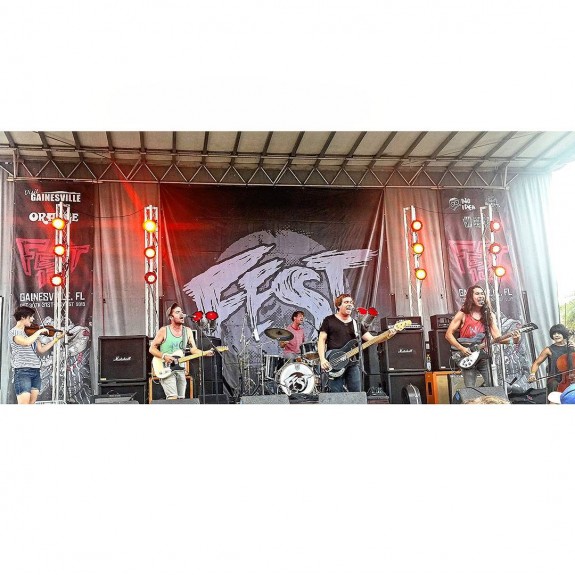
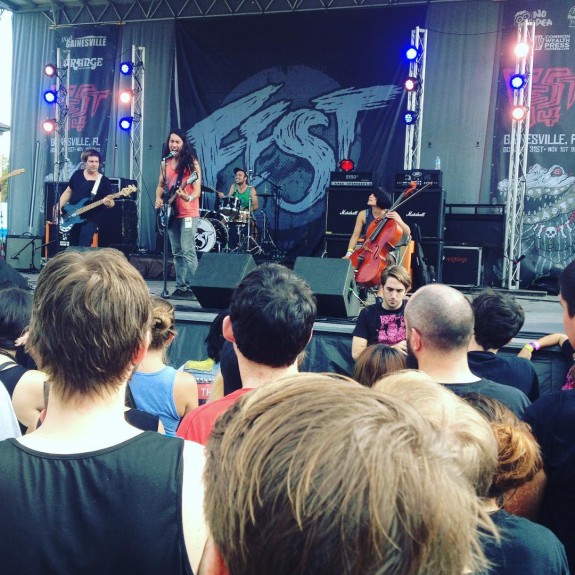
All day I heard different accounts of the “riot” that happened at the house show the night before. From different accounts I heard that people tried to tip over cars. I heard that some people tried to rough up a cop, that someone got tazed by a cop, that the cops got surrounded [...]

Playground BoysPlayground Boys

Playground Boys

I hear “Oona’s commmming!!! …” and then a stream of tag playing kids pours off of the playground equipment. Picking up O+F from school is way better than being at work.
It’s a little alarming that at any given moment there’s at least one pair of boys trying to pin each other to the ground. [...]

Fest 8 Day 2: Kickball and CostumesFest 8 Day 2: Kickball and Costumes

Fest 8 Day 2: Kickball and Costumes

I started my second day at the fest playing kickball. I know that plenty of people have traumatic experiences with sports from their youth and that, even with punks, its easy for things to turn ugly, but I do love the feeling of big groups of people being involved in something together. As [...]

I get to the hotel where we’re staying for the fest and start paging through the dense, brightly covered booklet that describes the bands playing and other events over the course of the weekend. Bz tells me, “just read the first sentence of the description,” and I do. It says, “Welcome one and [...]

Wal Mart Controls Chicago WeatherWal Mart Controls Chicago Weather

Wal Mart Controls Chicago Weather

I pulled my car into the remnants of a snow bank near the corner of Milwaukee and Paulina in Chicago’s Wicker Park neighborhood. Further down the block and across the street, the curbside was bare. According to a volunteer at a storefront across from the mysterious snow bank, the snow was created as [...]


Previously →

political correctness

I loved David Wilcox’s Chicago Reader article Human Care Bears about the cultural framing of people with mental disabilities.  I am always profoundly frustrated by the way that critiques of critiques of language dismiss people feeling offended or having other deeply personal reactions to certain words.  Wilcox’s writing about the word “retarded” is much more nuanced in its exploration of language and the way it describes or fails to describe people’s experiences.  Wilcox explains how, having a sister with mental disabilities, his relationship with the word “retarded” is complicated and evolving he can find it degrading, employ it at times, and find himself apathetic about its casual use.

Wilcox writes:

Through most of my teens and into my early 20s, I never hesitated to correct someone if I heard them use the R word inappropriately.

And then I eased up. Not altogether—I still consider retard, when directed at someone with an actual disability, a degrading term, and I’m not afraid to say so. But when I hear an acquaintance or a stranger toss off phrases like “that’s so retarded,” it hardly seems worth it. If it’s someone I care about, who I know will actually listen, then absolutely, I’ll take the time to explain why it bothers me. Otherwise, in my experience, pointing it out has just made people defensive, made me look self-righteous, and ultimately never changed a thing.

In his article he manages to offer, in part, the “sustained, thoughtful discussion” that he finds so missing in our society when it comes to talking about the word “retarded” (and really the way that language offends and mediates our society).

I really like the way he explains that both “retarded” and seemingly positive representations of mental disability fail to represent his sister’s reality.

Read “Human Care Bears.”


Why j-school?

My last post explained what I was doing, but not neccessarily why I was doing it.  I had to answer some questions for the Medill website about the Knight Scholarship and I thought I’d share my responses here.

What was your undergrad major / graduation year? Did you work in your field of study after graduation?

I graduated from the Ohio State University in 2003 with a degree in computer science and engineering.  Shortly after that, I moved to Bloomington, Indiana where spent the next few years working a number computer-related jobs, mostly in the area of web-based software development, but spent much more time playing music and coordinating the Midwest Pages to Prisoners Project.

What interested you about attending Medill? (aka, why journalism and why now?)

Through my work with non-profits and grassroots community activist organizations, I was always engaged around the news and information in my community.  I felt like many of the roadblocks towards solving community problems that became framed as ideological conflicts were, at their roots, a result of an information gap within the community.  People didn’t understand what was happening, how government or institutions functioned, and the stories of different people with different orientations around community issues.  Journalism seemed like one of the fields best positioned to help meet the information needs of communities, and efforts such as the Knight Commission indicated that there was traction for framing the work of journalists beyond traditional news media.

I was also becoming frustrated with my role as a technology maker. I loved coding, but it was often an experience that was isolating from other people and from important things happening in the world.  Through networks such as the Allied Media Conference, I saw that there were exciting possibilities for using technology and technologically-mediated information to engage in the world, but I needed support to move in this direction.

Truthfully,my interest in Medill was the possibility of the Knight scholarship.  In any discipline it is tragically difficult to have the space of a year to switch gears, learn, and experiment while still being able to support oneself.  The possibility of the scholarship made my personal exploration seem possible.

Rich Gordon’s efforts to lower the barriers for hacker-journalists to develop formal journalism skills made me feel that there was a place for my interests at Medill and I thought that it was a pretty clever use of News Challenge funds in developing a framework for new journalism pedagogy rather than a technological framework.

Finally, as someone making music, I was already in the practice of telling stories and mediating information.  I felt wary of the information that could fit in a two or three minute song.  I wanted to have other storytelling abilities to complement making and sharing music.  Projects like Detroit-based MCs Finale and Invincible’s Locusts video (http://emergencetravel.net/node/7)  showed that there could be a complete integration between music and storytelling about news, community, and history.  For me, I felt like the structure of school could help me learn to research and tell stories that had a similar impact.

What role do you see in the future for programmers/developers/electrical/engineers in journalism?

I think there are probably many new roles, especially regarding building and maintaining new platforms, but I am most excited about the emergence of hacker-journalists.  Just as a photojournalist tells news stories through photos, the hacker-journalist tells stories through data and applications.

Can you postulate a bit about what technical folk bring to the journalism table? How will journalism benefit from your POV? (Aside from solving the billing crisis, of course.)

More than anything, technical folk bring a different perspective, different practice, and experience solving different but potentially analogous problems.  There are many, many outside perspectives that could benefit formal journalism and while I’m grateful that I received a scholarship to help fuse my technological practice with formal journalism training, it is extremely unfortunate that there aren’t similarly specific opportunities for people like untrained community journalists reporting from communities under-served by and underrepresented in the media.

Journalism will benefit most from my point of view not so much as a developer, but as a free/libre/open source software (FLOSS) user/developer.  I think that the best of FLOSS practice can bring three things to journalism.  First, FLOSS projects often try to make information free, useful, and don’t presume how users will find their tools or the information that it mediates useful.  Second, successful FLOSS projects build on a base of collaboration and community.  Finally, many FLOSS projects have a goal of sustainability that is more nuanced than the simple profitability of the software products that are produced.


Back to school

I haven’t written here in a while and that’s largely because of going back to school.  At the beginning of January, I started a one-year MSJ program at the Medill School of Journalism at Northwestern University thanks to a scholarship from the Knight Foundation (read an article in Time about the scholarship).

Even with the funding, it was a hard decision to go back to school.  I’ve been surrounded by people doing awesome things, often in non-formal ways, without the support or constraint of school, and part of me felt like going back to school was a form of procrastination.

At the same time, the structure of school is really helpful to me in the way it balances my perfectionist tendencies.  It gives me a starting point.  All the possibilities for making things – the new programming languages I could learn, the songs I could write, the things happening in the world that I want to explore are so vast that I can easily just spin my wheels.  Having deadlines, project constraints, and even grades helps me to just do it and accept that there are things that I don’t do very well and have to get better at.

I also really love the way school makes me think about lots of different topics from the latest current events to how a municipality raises money, dissecting the way a news story works or doesn’t work effectively, debating the ethics of airing an unauthorized conversation with an accident victim trapped in her car. On face, I don’t know how interested I am in any of these things, but I love the process of inquiry and trying to link these ideas with things that seem more relevant to me or with some broader context.

All my classmates are really smart, and I think that it’s a good challenge for me to have to realize that people can come to a smart, critical perspective without all of the experiences that I always assumed make people smart and critical.  This is a ridiculous thing to realize, I know.  A classmate told me I was inquisitive and it’s hard to tell whether or not that was a euphemism. Somewhere along the way, whether it was because of grades, parental or teacher validation, the apathy of other students, I got the notion lodged in the back of my head that I was smarter than everyone else in the class. Going back to school when I’m more mature, and being around people who are smart and engaged has forced me to sit back and listen to others’ questions realizing that the time and space I take up is time and space I could be taking from someone else who has something smarter or more interesting to say or ask. It forces me to self-check whether my questions are really questions that I have or a performance of my identity as the kid who asks questions or brings a certain adversarial critique to the discussion.

Still, I feel like many of my classmates and I are looking to get different things out of school.  I’m glad that I got funding to go to school because I think that paying a ton of money to go to school, any school, can make you pretty risk averse or anxious about whether or not you get your money’s worth.  The program at Medill is only a year, which is good because it doesn’t eat up years of your life, but hard too, because it doesn’t give you much room for experimentation.  With the short time and high costs, there’s a lot of pressure to have a clear idea about what you want to do, get the skills you need to do it, and get out.

I think that both engineering, my undergraduate discipline, and journalism have very practical educational traditions.  This is great because I’ve been spending a significant part of my past weeks walking around Chicago neighborhoods, taking photos, recording audio, and talking to people.  On the other hand, there’s not as much space for trying out new ways to do things.  While there are “innovation projects” that many students can take, the goal of the program seems to produce graduates who have skills that will serve them well as working journalists, and I think that this is what a lot of students, at great expense, come to school for.  I see school less as a place to personally retool and more as a place where you can try out things that just aren’t possible or are too risky at a commercial media outlet, or where there aren’t the resources at an independent media organization.

Learning the basics of traditional newswriting has made me appreciate old-school journalism in a way I never did before.  There’s a craft that becomes apparent when one of my professors, a seasoned reporter, recasts a sentence you wrote and, like magic, it’s just better.  It has also made me understand media bias in a new way.  Within the constraints of time or space dictated by most of my stories for classes (meant to simulate those you would find writing for a newspaper), and writing for a broad audience, it was really scary to see how tame my stories turned out.  In everything I’ve written, even the things that are really bland, there have felt like a million editing decisions as part of the process.  I think that conveying information in a way that feels true, but is also compelling takes an incredible amount of time and practice.

In general, studying journalism is making me a better listener. Starting to talk to people with an angle in mind for a story is frustrating because, when I start talking to people. I can quickly realize that this really isn’t the story or that it will take much longer than my deadline to flush it out. But, even if I don’t get what I’m looking for, I still get the chance to have to listen, really listen to what someone else is saying about their experience, and I think that this can be a rare opportunity in today’s world. I’m am struck by how the competitive nature of mainstream journalism subverts listening. I don’t see how one can really explore the nuance of complex issues if you’re constrained to a certain number of paragraphs or have to file a story in a few hours. There is a craft in people who try to successfully navigate these constraints, but I’m convinced that there is also a need for media that isn’t mediated by these things.

Doing beat reporting has made me listen to the city in a different way also.  With each story, I see a different overlay of the city.  It might be graffiti one week, grocery stores the week before, foreclosed homes the next.  Jumping between these different areas of focus exposes both how vast the city is and also how much of it I can miss.

In j-school, I see such a struggle to shift from old media paradigms to new ones.  I’ve heard professors refer to citizen journalists at hobbyist or as competition for professional journalists, but there’s very little discussion of how bloggers and other community media makers are mediating and transmitting information that the mainstream media has no interest in dealing with.  It’s easy to talk about information in terms of the medium – print, broadcast, interactive – instead of the ways people use the information, or want to use information, or want to discover information.  There’s also a strict dichotomy between journalist and audience rather than seeing both as participants or part of a community.

The language of many of our lectures, even the future facing ones talks about the business of media or journalism. I see media as an ecosystem where business is part of the system, and maybe even an essential part, but where there are many components that are needed to maintain a healthy, sustainable flow of information. There’s a lot of messaging that seems intent on building confidence that graduates can find work in the remnants or next iteration of mainstream media. I wish there was some space for people who might be interested in participating in the rest of the ecosystem or putting the kinds of stories that people want to tell or the information they want to mediate first rather than the spaces where they can be told.

There must be spaces where the success or failure of an idea isn’t dictated by its market viability or practicality.


Cuts

A CTA Red Line train arriving at the Loyola stop

A few days into the recent CTA cuts and it really doesn’t seem that bad. The Tribune even seemed to struggle with its coverage when some people were saying their transit experience after the cuts sucked and other said it was fine, which is pretty much how the discourse over the quality of CTA service always goes. What is kind of terrifying is how different people’s experiences can be in the same city, riding the same transit system. It seems like a metaphor for the hopelessness of looking outside of one’s own experience.