Roe v. Wade Anniversary Rally in Bloomington

Event: Roe v. Wade Anniversary Rally
“Celebrating 36 years of reproductive choice!”
What: Rally
Host: Roe supporters
Start Time: Thursday, January 22 at 2:00pm
End Time: Thursday, January 22 at 3:30pm
Where: IU Sample Gates

To see more details and RSVP, follow the link below:
http://www.facebook.com/n/?event.php&eid=71448004688

COMMUNITY MEETING AGAINST JAIL EXPANSION

INVITATION TO COMMUNITY MEETING AGAINST JAIL EXPANSION

SATURDAY, JANUARY 31, 3:00-6:00 p.m.

GREAT HALL, TRINITY CHURCH, 111 S. Grant St.

Childcare will be provided

Decarcerate Monroe County (DMC), with the encouragement of Citizens for Effective Justice, UU Friends of Prisoners Task Force, and New Leaf/New Life, is pleased to invite you to a community update and discussion on Monroe County’s plan to expand incarceration. Please come to share information and personal stories about incarceration, coordinate efforts to fight the expansion, and begin developing effective, long-term strategies and proposals to reduce incarceration!

BACKGROUND

In the fall of 2008, the Monroe County Criminal Justice Coordinating Council (MCCJCC) held a series of meetings ostensibly to solicit public input regarding the proposal to construct new criminal justice facilities, including a new youth lockup, to replace the current jail. The meetings gave criminal justice personnel opportunities to present their assessment of the current situation and to make their arguments in favor of the County’s plan for expansion. The final meeting offered a platform for the presentation of construction plans by the Noblesville-based design and construction contractor PMSI, Project Management Solutions Incorporated. Despite overwhelming opposition expressed in public comments, County officials seem to have emerged from the meetings with continued determination to pursue the expansion plan.

COMMUNITY MEETING

As an alternative and follow-up to this series of meetings, Decarcerate Monroe County has called a genuine public forum for Saturday, January 31st, in the Great Hall of Trinity Church. This afternoon will offer information, facilitate a broad-ranging public conversation, and plan continued active response. People should bring their experiences and ideas to contribute to working out practical solutions to the problems the jail purports to solve but actually only worsens.

WHAT IS DMC?

Decarcerate Monroe County is an open coalition that works to challenge the belief that cages, coercion, and confinement keep our community safe. DMC believes that people are safe when they have their basic needs met and when they feel empowered and free. DMC works to build access to meaningful, non-coercive options for dealing with problems and resolving conflict. We resist expansion of incarceration, including the proposed adult and youth jails; we support shrinking the existing punitive justice system in Monroe County.

While the group calling the meeting is explicitly against jail expansion, the Community Meeting will welcome the broadest array of opinions — please come and let’s all work together to make Monroe County a safer and more just place!

Setting up Embarq DSL with Wifi using Microsoft MN-700 wireless access point

My parents and brother use Embarq DSL and they just got a used Wireless router. Like most folks, they either had the DSL set up for them, or did the initial configuration without understanding or remembering what they did, so I’m writing this as a reference for them, for other family tech support people working with the same hardware or services, or as a general framework for how I figure these things out.

The DSL Service

The first thing I did was to try to figure out how their DSL connection worked. In most cases I’ve seen, there is either a DSL modem and the computer handles the PPPoE connection or the modem is also a router.

My parents’ systems are running Windows XP, so I went to Start->Connect To->Show All Connections. There were only the connections under the heading LAN or High Speed Internet. If the computer was doing PPPoE, it would be listed under the heading Broadband. When I double-clicked on the Local Area Networ€k connection icon and the Support tab, I saw that the computer was getting an IP address of 192.168.2.2. So, it looks like their DSL modem is also doing routing. The much easier way to tell this would have just been to flip over their modem and see that it was labeled ADSL router, although I’m guessing that most ADSL modems/routers can disable the routing, so maybe it’s a good to check and see how the computer is actually connecting.

The ADSL hardware

My family is using an Embarq EQ-66OR ADSL Router

The Wifi hardware

My brother acquired a Microsoft MN-700 Wireless Base Station. Since they got the hardware second hand, it didn’t come with any documentation. Luckily, I found it here: MN-700 Base Station Configuration Guide

Determining hardware capabilities

Since the DSL modem is doing the routing too, I think the easiest thing to do would be to configure the wireless base station to just act as a base station and not do any routing. Then I don’t have to figure out how to configure the modem or what my family’s login credentials are for the DSL service.

I looked at the table of contents for the configuration guide and saw that there were sections for Local Area Connection, Wide Area Connection, and Wireless Mode. What I want to do is to configure the access point in what is often called bridge mode. I started looking at the wireless mode section and realized that it was just choosing between 802.11b and 802.11g. I looked at the Wide Area Connection and Local Area Connection section and it seemed like you had to set a DHCP range for the local network. This wasn’t looking good. I searched for the word bridge and nothing came up. I quickly scanned through the documentation and found the section Base Station Mode. This is what I wanted! This illustrates the point that its always good to (quickly) Read The Friendly Manual.

Planning the network

Now that I know that the hardware can do what I want, and I know which hardware will do what, I can plan the network.

The ADSL modem (EQ-66OR) will do the PPPoE connection and the routing.

The wireless base station (MN-700) will just pass through wifi connections to the router.

The modem and the router will be connected using a standard ethernet cable going from the yellow port labeled Ethernet on the back of the DSL modem to the port labeled To Modem on the side of the wireless base station. Computers will either connect to the network wirelessly or through an Ethernet cable connected to the ports labeled 1-4 on the wireless base station.

So, for the basic connection, I’ll need:

  • The wireless base station
  • The ADSL modem/router
  • An Ethernet cable
  • Space in a power strip for the wall warts (AC adapters) for both the DSL modem and the wireless access point

Configuring the hardware

I should, hopefully, be able to leave the DSL modem configured the way it is, so all I’ll have to configure is the wireless access point.

I connected the DSL router from the computer and connected it to the wireless access point as I specified above.  I powered on the wireless access point and saw that a wireless network connection MSHOME was available.  I connected to this network.  From the docs, I found that I need to connect to the address http://192.168.2.1 in my browser in order to configure the access point.  This didn’t work, so I went back to Start->Connect To->Show all connections and double clicked on the Wirleless Area Connection and the Support tab to see that the computer was getting an IP address of 192.168.0.2 with a gateway of 192.168.0.4, so I typed http://192.168.0.1 in my browser.  I guess I should change my earlier rule to Quickly Read The Friendly Manual But Be Flexible (QRTFMBBF)  This still didn’t get me to an adminstration page. Sometimes access to the administrative pages is disabled for a wireless connection, so I disconnected from the wireless network and connected the computer to the access point with another ethernet cable.  I find that when doing these kinds of network installs its always good to have an extra network cable or two at hand.

When I connected to the access point with the wired network, the computer got an address of 192.168.2.4 and I was able to access the administration pages with my browser at http://192.168.2.1.

The administration page asked me for a password.  My brother said that he thought he had reset the base station back to its factory settings, so I tried the default password admin, which worked.

Set a new administration password

For security, I went to General settings->Change password and asked my mom for a password that she would remember.  I also made a secure note of this for future reference.

Put the access point in Base Station Mode

I set this by following the links to Security->Base Station Mode and chose the Access Point Mode radio button.  I had to select an access point name and chose tenhopedrive, my parents address, because I like giving wifi nodes some geographic significance.  I would use this name in my browser http://tenhopedrive to connect to the admin pages.  This is exactly what I had to do, because after changing the above setting, it rebooted the access point, logging me out of the admin pages.

Set access point SSID

I did this by following the Wireless Settings link and typed tenhopedrive (for consistency) into the Wireless network name (SSID) field and clicked the apply button.  Once again this caused the access point to reboot, and I had to reconnect to the wireless network under the new SSID.  I had to refresh the list of available wireless networks a few times in order to see the new name.

Testing the network

There were a few things that I wanted to make sure worked right, because I wasn’t sure how they would work.

Wired Network

Putting the access point into access point mode, I wasn’t sure how this would affect the wired network.  I made sure the computer was still connected to the access point by the Ethernet cable, disconnected from all wireless networks, and made sure I could access google.com in my browser.

Wireless Network Connection

I then disconnected the Ethernet connection and connected to the wireless connection and made sure that I could still connect to google.com in my browser.

Multiple Computers

The last thing I wanted to test, which is probably something I should have investigated initially, is whether or not multiple computers could connect through the DSL router. I wasn’t sure if they had set up some kind of MAC address filtering or something to only allow my mom’s laptop to connect.  I fired up my laptop and connected to the wireless network I just created to see if I could connect to google.com in my browser.  This worked just fine.

Afterthought: Port Fowarding

You know what they say about the best laid plans of mice and men.  I forgot that my brother might want to use port forwarding for P2P filesharing or chat apps.  With the way I configured it, I would have to configure this on the ADSL modem/router.  So, I tried to access this by pointing my browser at the gateway IP reported by Start->Connect To->Show All Connections->Wireless Area Connection->Support.  I found that I got an admin page login, and that the password was still set to the default, 1234.  This was bad since I wanted to have the wireless network be open (to make it easier for my family to not have to remember and additional password or get locked out of their wifi if their computers forgot the stored password and for good-neighborness).  So, I reset the router admin password to the same admin password as the access point and made a note of this.

I confirmed that I could set up port forwarding on the router and that they also had dyndns settings available, something that wasn’t available, as far as I could tell on the access point, so it looks like I made the right choice in using the ADSL modem/router for handling routing.  I went ahead and set this up too, but that’s beyond the scope of this howto.
Stumbling upon media

I was reading an interview with someone and the interviewee mentioned that one thing that was lost in internet use is the experience that one has in the library of stumbling upon something unexpected and quite often unrelated to your query while searching the rows of shelves in a library.  I had a similar experience with the radio the last time I drove back from Indy from a doctor’s appointment.  I was scanning through the radio dial and found the Mo’Nique in the afternoon radio show and found it again today when I was driving to the airport.  It was such a nice surprise to hear the call in show and all these different people’s voices, joking, and telling stories.  It was a kind of communication that was mediated, for sure, by distance and technology, but it also felt rich, natural, and connected.  I imagine people all over the country listening to the show and calling in while stuck in rush hour traffic which is usually such an isolating, dehumanizing experience.  It was a nice surprise too since my idea of this kind of drive-time radio show, solidified in the many hours I spent listening to WINK 104 in Harrisburg when I was a kid, was always an abrasive, sexist, white, male, “shock jock”.  It was nice to hear voices that were warm and nice but definitely not boring.

Yesterday, I went to see The Tale of Despereaux which was pretty disappointing.  When the movie finished, I heard a chorus of young voices in the theatre not-quite-whisper, “the book was better”.  More than that it’s frightening to think about how normalized gender roles (“every girl wants to be a princess”), violence against women, and ethnic stereotypes (in a world populated by rats and mice, guess which ones are Anglo, and which ones are vaguely Arab, not to mention the continued representation of French and Italian people as eccentrics who are only good at being goofy and good at cooking) become in media, especially for young people.

I think I’ve always been accused of picking things apart to the point of not being able to enjoy anything.  And I wonder, am I just a hater whose cynicsm will just rub off on younger people so instead of enjoying something, in spite of its faults, they’re reminded how ugly and hopeless the world can be?  The thing about being critical, though, about disecting the things that I hear or read or watch is that when I stumble upon that rare thing that doesn’t rely on the ugly, played-out stereotypes, that even after dissection still maintains some mystery and magic, it’s that much better for really knowing how rare it is.

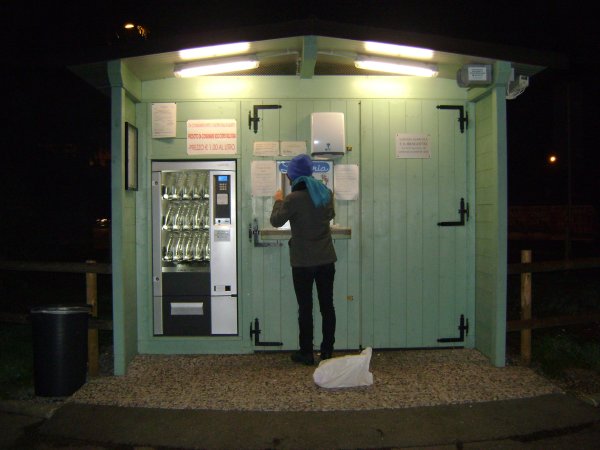
Milk Machine

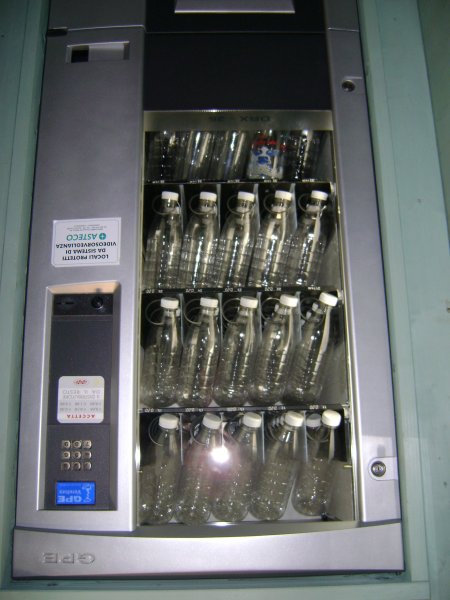
The Milk Machine in Mariano Comense, Italy
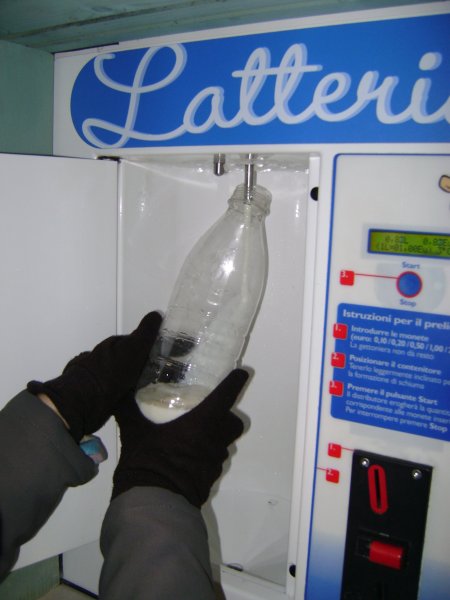
The instructions and coin slot of the milk machine
The bottle vending machine adjacent to the milk machine
Filling a bottle with the milk machine

Gaza, reading, and one world, many people

I’ve been trying to make sense of everything going on in Gaza, all while traveling and getting bits and pieces of the story.  This all the more difficult because in the last few months, I’ve seen a lot of media that reiterates the absolute horror of the Nazi German holocaust, and in the last week, picked up two books that Chiara had been reading: a little book about WWI and a book about Islam.  The book about WWI, despite the authors enjoyment of the play-by-play excitement of the war, made me feel like the whole thing was started as a pissing contest for power and territory – absolutely ridiculous.    I learned that the origins of the state of Israel are with this war and the partitioning of conquered lands by various European colonial powers and it made it very easy to feel like peace was doomed from the start. The book of essays on Islam made me realize that the faith and culture of Islam and the politics of the Middle East are so much more complicated, rich, and nuanced than what I had known through my education through the U.S. media.  Aside on the importance of teaching: I never learned about Islam, or the Middle East, for that matter, in school.  Even during the first Gulf War.  It is crazy for me, and likely a whole generation of people my age, to be so ignorant of something so pivitol in the world.

This article, Why Gaza Matters To Us, has been filtering through my social network, and I like this snippet at the end:

As people of color who have our own various histories of resisting the erasure of our cultures from this planet against the spread of military-corporate assimilation, we must stand with the Palestinians, speak out, and take action. The anger and mourning we feel should drive us to break the cycle of domination vs. extinction. Fear, including the righteous fears of Jewish people who want to exist, and the righteous fears of Palestinians that they will be relegated to life in a walled prison and never allowed to be home – these fears are not going to create a world in which peace is possible. We must approach the Israeli people as brothers and sisters who have gone astray in the wake of their own trauma, help them to clean the blood from their hands, and come home to the human family.

I have a harder time with the article included at the end, David Lloyd’s Gaza and the Ghetto.  I think that the thought experiment of imagining Nazi Germany in the place of Israel and Palestinians in the place of Polish Jews is an accurate analogy, but it continues to frame the current conflict in terms of the Holocaust, which is the problem with the analysis of too many attrocities whether they’re in Palestine, Rwanda, or elsewhere in the world.  State repression, genocide, and people losing their dignity and safety is unacceptable in it’s own right, anywhere, at any time.  Framing things, especially Israel vs. Palestine within the Holocaust traps everyone in a hopeless argument of who has had things worse.  This is a string of analysis that is easy to get caught in and to which many, many people can add their own legitimate weight, but that ultimately seems to trap everyone.  Watching children squabble, it seems like the same argument, though with much lower stakes.  Someone else always started it, making retaliation, even if it’s something that you wouldn’t want inflicted on you, justifiable.  As I child, I was often told, “life isn’t fair,” which was always unsatisfying, and lacking much empathy at that age, it as hard to see that life was not only unfair, but also mutually unfair.  I think the more truthful, and hopeful life lesson is that life isn’t just unless you make it that way and that retaliation, and rationalizing it, is not the same as justice.  I want to try to read One Country in the hopes that it offers some way out of the cycle of trying to define who is the most attrocious or victimized and instead figure out how to define the things that everyone wants, safety and dignity among them, concretely, and how to get there.  The question of how to achieve one country for two peoples isn’t just crucial to Palestine and Israel.  From what I’ve read so far of The Accidental American, to the recent U.S. presidential election (and prop 8), to Chiara comenting on the changing cultural landscape (even at street level) of Italy, to the crazy internal conflicts within arbitrarily drawn nations and conquered empires that were at the heart of the world wars (maybe most wars?), to my own personal experience, the idea that we can or should live in a world with segregated identities or interests is both impossible and undesireable.  I am absolutely convinced that conservatives who want to preserve a culturally and ideologically segregated world are less than wrong, they’re irrelevant.  Still, I think that radicals who imagine a world without these borders can’t hope for justice without acknowledging cultural and ideological boundries and the people ensnared in them.  The question for me becomes how to acknowledge people’s experience and the perception that it creates without succumbing to the morasse of ethical relitivism.

Rome!

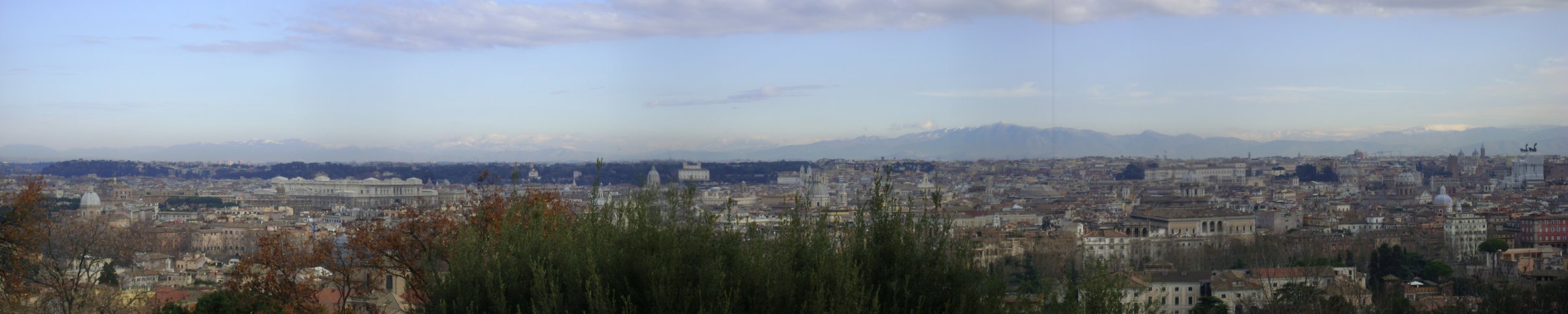
A panoramic view of Roman from across the Tiber

I took some photos of Rome from a beautiful hilltop across the Tiber and pieced them together (albeit slopilly) using the awesome Pandora GIMP plugin.

Drupal and content purgatory

Let’s jut say you’re migrating content from a static site to a Drupal-based site.  Let’s say that you don’t want to migrate the content all at once and want to roll out the new Drupal-based site ASAP and migrate content as you’re able to.  One thing that you could do is to make your old site static.mysite.com and your new Drupal-based site mysite.com.  Then use the Custom Error module and this snippet to automatically redirect to content on the old static site.  If the content isn’t in either place, they’ll get a 404 from the webserver of the static site.

<?php

$static_content_host = 'static.mysite.com';

$destination = isset($_REQUEST['destination']) ? $_REQUEST['destination'] : '';
header('Location: http://' . $static_content_host . '/' . $destination);

?>

Out With the Old …

and in with the new …

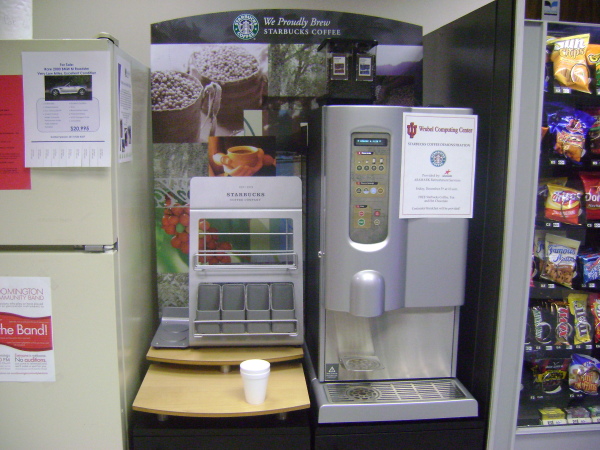
What’s the word that means the opposite of panacea?  There must be such a word, but I don’t know what it is.  If ever there was something that was seen as a symbol for everything that was bad about the expansion of corporations and the power of global capital, Starbucks would be it.  Hating on Starbucks as the great satan of the coffee world seems so 1998, especially if one thinks about the differences in wages and benefits for Starbucks workers versus many independent coffee shops and the differences in “diversity” between the work forces.  At the very least, things are more complicated when it comes to coffee shops or globalization.

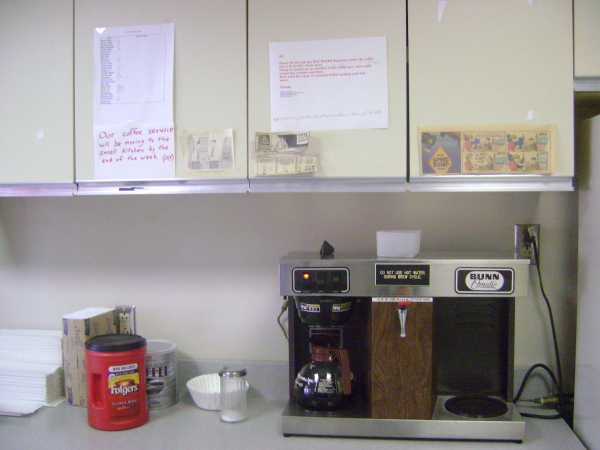
Still, it seemed like the punchline to a tasteless joke when I saw the worker-run, communal coffee service at my work banished to the smaller, further kitchen and replaced with the sparkling Starbucks-branded machine.  Great. Starbucks wasn’t satisfied with having a presence on every other street corner in some major metroplolitan areas, rapidly gentrifying neighborhoods, and interstate exits, it had to squeeze into my job’s break area too.  If I don’t fall back on portraying Starbucks as the totally evil corporate monster, it’s not quite as easy to explain what’s wrong with the coffee giant, but the machine’s arrival bothered me somehow.

I think that what I don’t like about the machine, and the chain in general, is that it erodes a community’s (whether a workplace or a neighborhood) immagination and sense or responsibility.  With the collective system, people had to figure out how to negotiate machine ettiquete, what kind of coffee to buy, how much to charge per cup, what to do with any profits, and what to do about delinquent users.  Even if someone coordinated the system, I think that there was at least a sense that the existence of the system was dependent on some consideration of these questions and a certain amount of responsibility for maintaining the flow of coffee at the offices.  These aren’t hugely important questions, I know, but it’s easy to see how these could be seen as a microcosm of the bigger considerations of a community.  With the new machine, you just pay your money and that’s it.  If it doesn’t work, someone else will come fix it, or maybe they won’t.  If the prices seem too high, you just have to deal with it.  Who knows where the profits go.  Maybe if the machine doesn’t make enough money, it will go away, but to buy or not to buy and cup size are about the extent of the choices.  This doesn’t exactly empower a great deal of positive coffee stewardship.

Thinking about the implications of brick and mortar coffee shops, I recall an independant coffee shop that I once visited, and really liked, in another city.  It was in a largely Latino neighborhood that was struggling with gentrification within the city’s long history of racial segregation.  On the wall of the coffee shop was a clipping of a news article about the neighborhood entrepreneur who opened the shop.  In the article, he said:

“When I came in, there was a lot of old-fashioned-thinking people who thought I would never make it,” says Mr. Delgado, 36. “But I saw an unmet need in the community for a place where people could come and hang out. Just because you’re Latino doesn’t mean you have to eat tacos every day. We needed a cafe.”

If, instead of this coffee shop, a Starbucks had opened up in this neighborhood, it probably wouldn’t have explicitely challenged this assumption, both internally and externally about Latinos.  In so many places, I perceive Starbucks as a marker of gentrification, something comforting to outsiders coming into the neighborhood and something unused and hostile to some long-term residents.  Instead, a coffee shop might act as a so often absent middle ground where creative-class newcomers, long-term resident coffee drinkers, and those who defy the stereotypes of coffee shop patron that, at least for me, still revolve around the cursed Friends sitcom, all find some sense of investment.  A shared space to drink coffee won’t solve the problem of gentricication, but it seems so hard to find other foundations for dialog or accountability.

A sense that a business is accountable and malleable to a community is so important.  Otherwise, tough questions about economics and social responsibility get reduced to “should I stay or should I go” as was the case with neighborhood “save our Starbucks” campaigns when the company recently cut the number of franchises or the fate of the “too big to fail” auto industry.  That simplification, and the accompanying sense of things that severely impact lots of people being totally out of their hands, might actually qualify as that thing that is the opposite of a panacea, whatever the proper word is.

On a somewhat related note, I’ve been in Italy for almost 3 weeks and have drank a lot of coffee.  I have yet to see a Starbucks, or even a to-go cup of coffee.  It seems that most people get their coffee from one of the “bars” that seem so ubiquitous.  People either sit or stand at a table or a counter, but it’s nice to see drinking coffee as a real break and social activity instead of a fillup.  I haven’t been able to perceive much difference between the quality of the places I’ve been too, but I appreciate the little differences that come with independently owned places – the decor, slight differences in the menu, and the idiosyncracies of the proprieters.  I really like the cast of regulars that trickle in and the longstanding repoir they seem to have with the folks behind the counter.  Maybe this is how it feels for people who frequent their nearest Starbucks, but it’s hard to imagine it being the same.  It’s the difference between feeling that twinge of propriety over something in your corner of the world and things being made the same, everywhere.

Bump Remover

The stiches after my cyst has been removed.

“What’s CR10?” my surgeon asked as he pointed to the t-shirt I had gotten from my volunteer shift at the conference.  “It’s a conference that I went to about prisons,” I replied.  I have this problem where I either explain things too verbosely, or to simply.  This was one of the times where I should have been more specific.  “I think that we should deal with prisoners by putting two people in a cell together and giving them one gun,” offered the surgeon.  Stunned, isn’t exactly the right word, because the surgeon’s response was both a shock and totally expected.  I hate these moments when someone says something that is completely offensive, largely ignorant, representative of so many things that are troubling, but when one also has this overwhelming sense that, in the grand scheme of things, what was said, and any possible response, really don’t matter.  There was a lengthy, awkward silence, an expression of terror on the face of the surgeon, and then he quickly sputtered, “I’m joking, I’m joking.”  I don’t think that he would actually advocate for this kind of plan to reduce prison overcrowding, or that he really thought much at all about such things.   Sadly, his best guess at a joke about prisons said a lot about his reading of what the average person would probably think about incarceration and incarcerated people.  I didn’t want to think about this at the moment and didn’t want to add another item to my queue of hopeless things for humanity, I just wanted him to do a good job of cutting the bump out of the back of my neck.

In general, bedside manner and small talk didn’t seem to be his strong suit. This was fine with me as I’d come to expect perfunctory treatment from healthcare professionals.  I’ve started to expect doctors to be like tech support.  I just want them to get the job done quickly and correctly and to answer my questions and to make me feel like they’re not messing up.  I want a feeling of competence and not neccessarily warm and fuziness.  He started explaining the procedure of removing the cyst, and again, his tone indicated that such explainations were something you learned was important to do in medical school, but not something that he felt was important.  It all sounded reasonable enough to me anyway.  As he had explained, he injected the area around the cyst with a local anesthetic.  I had been offered the choice of this option, or general anesthetic, but chose the shots because it was cheaper and meant that the procedure could be done in his office instead of the hospital.  It was pretty painful, but momentary.  I was surprised at how quickly the drugs took affect and how there wasn’t so much a sense of numbing, but of complete absence of feeling.  As he made his first incisions, it was really strange to anticipate pain and feel nothing, to feel outside of just one part of my body.  All I ever felt was the strange, gentle tugging at my neck.  It was to physical sensation what dream is to memory and at least the feeling was something to focus on.  At one point, I felt a sharp pain as the anesthetic wore of, but after a few more shots, it was back to feelings of gentle tugs.  He said that in many cases, one could just peel the cyst from the surrounding flesh, but in this case, he would have to scrape it.  What did it look like, the inside of the mass that had been slowly growing for the past year or so?  With his description of the extraction, all I could muster was the image of removing the flesh of an avocado from the skin.  This was medically inaccurate, I know, but I couldn’t find a better relation for scraping and peeling.

The whole procedure, or the surgical part, at least, took only 15 minutes.  By then, he had stitched me up and I was out the door, my surgeon scribbling a prescription for antibiotics and hurredly giving me care instructions as we walked down the hall.  Do you have any questions?  No?  Good.  I walked out of the office, murky with its faded carpet and wood paneling, and into the pale midafternoon sun.  I felt off, maybe more for lack of side effects that are so common now (for example, in this case here http://sideeffectsofxarelto.org/xarelto-lawsuits/, one can get worse taking pills to get better!), than for any lingering effects of the surgeons incisions.  It seemed strange for my body to keep going, seemingly undettered by the extraction.

Recently, a few months from having the cyst removed, then the stitches, and the end of the no-swimming period (the cyst’s absence left a hole, the surgeon explained, and with permeable skin you don’t want the hole to fill with water), I’ve gone twice with my friend to visit her grandfather in his nursing home.  Her grandfather, whose exploits as a young man have become family legends that transfix his great-grandchildren with wide eyes and jaws agape when they are retold, is now mostly heavily sedated.  This, I am told, doesn’t have a particular medical purpose, but is instead to make it easier for the staff to deal with the residents, to make them pliable and to soften any emotional outbursts or expressions of discontent.  He swallows akwardly and I wonder if, through his entire body, he feels the disconnection that I felt in the square inch or so of my neck.  I realize that my expectations for my healthcare provider, my pragmatically constricted settling on the doctor as competant technician, are the expectations of a relatively young, relatively healthy person.  For someone facing greater uncertainty with their health, whether because of age or serious illness, I can understand the desire for care that is actually caring and not just fast and relatively error free.  The healthcare needs of different people are very different and healthcare systems, in general, and attempts to address the needs of the uninsured such as the Healthy Indiana Plan in particular, struggle to address this.  At the very least, they can aknowledge these differences with some empathy, but far more is going to be needed.

Becoming a health care consumer, after a few years of being uninsured, I’ve become part of a larger dynamic.  I’m going to the doctor with all the health issues that I had previously ignored.  In states like Massachusetts with healthcare systems that attempt to insure large numbers of the previously uninsured, this has put a heavy load on primary care physicians.  In addition to my cyst, I wanted to try to get rid of a wart on my finger.  I got referred to a dermatologist, but there weren’t any who accepted the Healthy Indiana Plan in Bloomington, so I had to go to Indianapolis and wait for a few months for an appointment.  My appointment ended up being a few days before leaving Indiana for a few weeks for the holidays so time was short and I ended up driving to Indy, having my appointment, and then heading straight back.  The appointment was at the university hospital’s outpatient center and navigating the campus and then the labirynth of the hospital was pretty frustrating.  I liked the doctors though.  I’ll chalk it up to the hosptital being a teaching hospital of the university because they had that laid-back, almost jovial quality that I’ve come to find through the halls of many universities.  It was in stark contrast to the crazy bustle of the hospital and the university.  The doctors were also very happy to take time to answer my questions in some depth, and I wonder if this can also be attributed to the frequent questions that come with being a student or teacher.  It took maybe half an hour to get the wart frozen and to answer my questions and for me to answer theirs and more than three-times that to make the drive up and back.  I’m happy to have been able to see the doctor, but I can’t help but feel like things could have worked more smoothly.

Having not had health insurance for a few years, and having not really used healthcare before that, it’s hard for me to tell whether my experiences are representative of some of the struggles that everyone is having with healthcare or if they’re the result of having only the sparsest health coverage.  In either case, I feel like I need to be more constructive in defining what I would like to have:

  • I want to be able to see doctors in my own community
  • I want to be able to pick from a variety of doctors and I want to have resources available to make informed choices about my doctors.  When most of the people you know don’t have health coverage, it’s hard to get good information through word of mouth.
  • I want a stable set of doctors who accept my health coverage
  • I want to be able to see a doctor within a few weeks, not a few months
  • I want dental coverage in addition to other types of health coverage